
National Award-winning,
Family-run Newspaper
Family-run Newspaper
MAMAKATING – The Town of Mamakating was all ears Tuesday afternoon as it received updates through a short Q-and-A session with Dog Control Officer Vicki Darnobid during its regular Town Board …
This item is available in full to subscribers.
Please log in to continue |
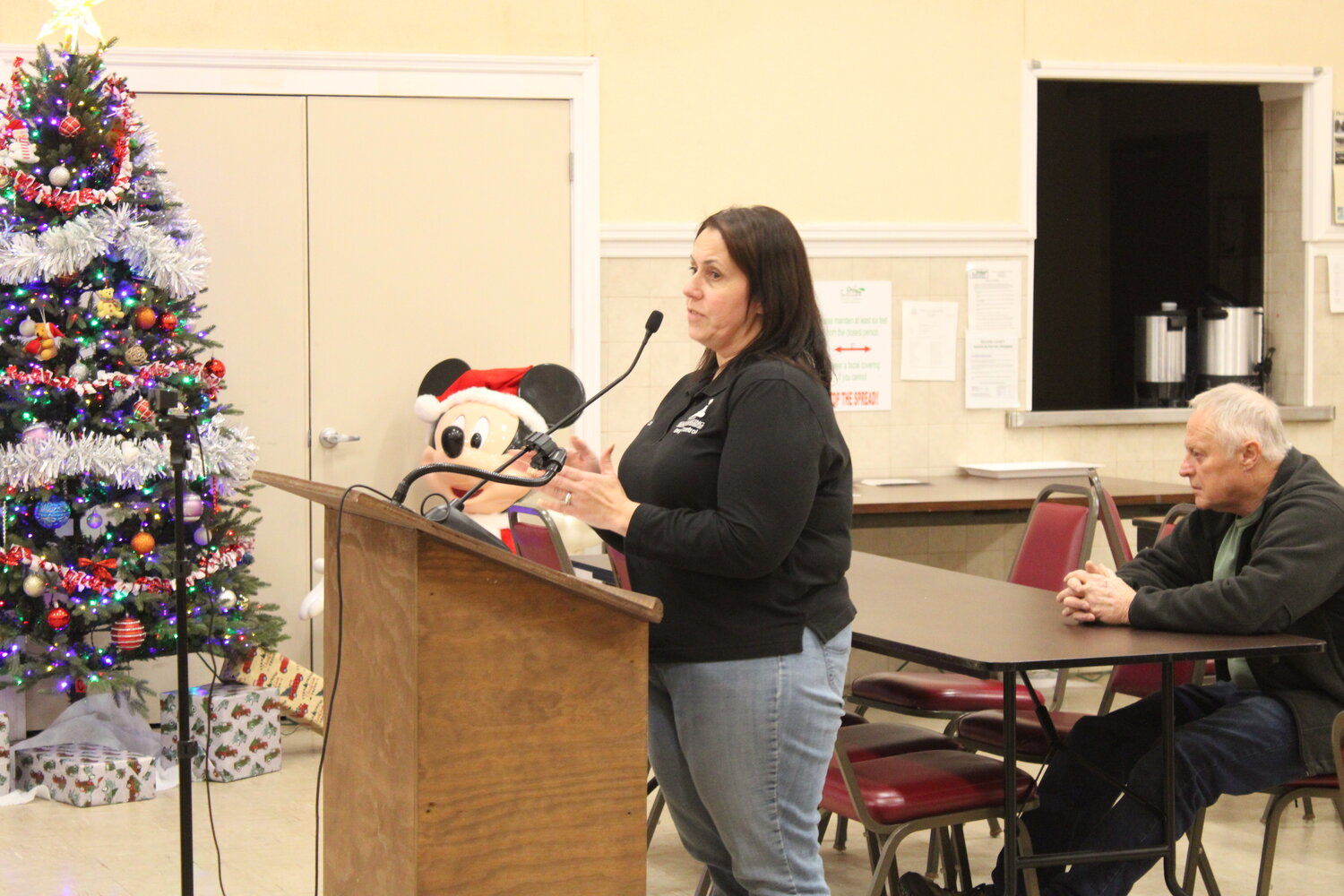
MAMAKATING – The Town of Mamakating was all ears Tuesday afternoon as it received updates through a short Q-and-A session with Dog Control Officer Vicki Darnobid during its regular Town Board meeting. Among the topics discussed were the review of animal shelter contracts for the upcoming year and the increasing challenges facing municipal animal control.
Town Supervisor Michael Robbins inquired about Darnobid’s opinion on the Village of Walden’s contract with the town, citing increased prices and noting that additional contracts with Middletown and Port Jervis were also being considered. Darnobid stated that, after speaking with shelter management, the increased costs were understandable due to new state requirements.
“As of December 15, shelters have many new laws they have to follow,” Darnobid explained, citing enrichment standards. She stated that shelters are now expected to provide dogs with more space, stimulation, and oversight, all of which make shelters “a little more particular” about which dogs they can accept.
Darnobid also discussed the current system, which prioritizes reuniting dogs with their owners as quickly as possible. The incentive is the $75-per-day boarding fee while the Dog Control Officer actively searches for an owner before the dog reaches the seven-day mark, at which point ownership transfers to the shelter.
“We want to reunite the dog as quickly as possible,” Darnobid stated. “If the dog is redeemed before seven days, we’re charged the boarding fee, not the disposition fee.”
She recounted that in previous years, the town paid a flat disposition fee ranging from $275 to $350 regardless of when a dog was reclaimed, making the newer structure more cost-effective when owners come forward early.
Not everything has been smooth sailing, however, as Darnobid acknowledged that reunifications have become more difficult in recent years.
“It’s been a tough last two years of dogs just being abandoned on roads in our area,” Darnobid said. “When that happens, I bring them in, scan them, we post them, we look for owners, we do as much as we can. If no one comes forward by day seven, they’re transferred to the shelter’s ownership.”
Deputy Supervisor Peter Goodman asked what factors go into choosing a shelter for a dog. Darnobid noted that recent changes in shelter law have eliminated after-hours drop-offs, requiring staff to visually assess dogs before accepting them. Because of this, placement often depends on availability.
“I pull over and start making phone calls or text messages,” Darnobid said. “It’s really whoever has room at the time, and that’s been very difficult.”
Legally, Darnobid is only allowed to hold a dog for 24 hours, but she noted that even with a fully equipped animal control vehicle, dogs cannot remain there for extended periods. This has required close coordination with multiple shelters, including Walden, Port Jervis, and more recently, Middletown.
When asked whether she supports the Walden contract, Darnobid said she does.
“I do think it’s a proactive contract,” Darnobid noted, highlighting the time allowed for owners to reclaim dogs while recognizing the real costs shelters face.
She also explained how redemption fees work when an owner is found. Owners must prove or obtain a dog license through the Town Clerk, pay the required redemption and seizure fees, and then present a receipt to the shelter to retrieve their dog. The town is later billed only for the days the dog was boarded.
Councilman John Rufer speculated that losing even one shelter could create serious difficulties for the town, a concern Darnobid agreed with as she stressed the importance of strong working relationships.
“There is a possibility that if you lost one of these shelters, you might not have a place to put an animal if something happened,” Rufer stated.
Darnobid also referenced cases involving residents who have experienced mental health crises or passed away, leaving animals without immediate care. In those instances, the town has had to hold the dogs itself or rely on shelters to do so.
“It’s trial by fire sometimes,” Darnobid said, “but it helps to have a community we can work with [when it comes to] the shelters, absolutely.”


Comments
No comments on this item Please log in to comment by clicking here